
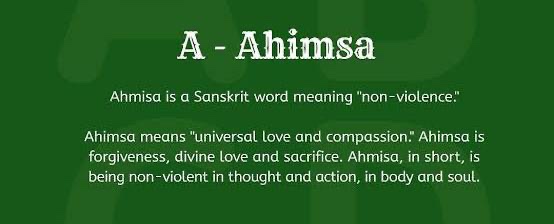
अहिंसा or Non-violence is a powerful concept that has been used throughout history to bring about change and transformation.
Here are some practical ways to practice non-violence in your daily life:
- Speak with kindness and compassion.
- Choose non-violent forms of communication, such as active listening and dialogue.
- Practice self-care and self-compassion, which can help reduce stress and anxiety.
- Take time to understand others’ perspectives and experiences, even if they differ from your own.
- Avoid physical violence, including hitting, pushing, or bullying.
- Choose non-violent forms of protest and advocacy, such as peaceful demonstrations and petitions.
- Be mindful of the impact your actions have on others, and seek to minimize harm as much as possible.
- Emphasize reconciliation and forgiveness over retaliation and revenge.
- Recognize that non-violence is a long-term process that involves ongoing learning and growth.
- Believe in the power of non-violence to create lasting change.
Ahimsa is a principle of non-violence and compassion towards all living beings.
Practicing Ahimsa means avoiding harm to others in thoughts, words, and deeds.
This principle can be applied in various aspects of day to day life, such as choosing a vegetarian diet, avoiding aggressive behavior, and promoting peaceful communication
Ahimsa also includes being mindful of our impact on the environment and minimizing harm to nature. Ultimately, practicing Ahimsa can lead to a more harmonious and compassionate world.

 GoodSoul.in